
Deer in Urban Areas
Authored by: Annalissia Padillia
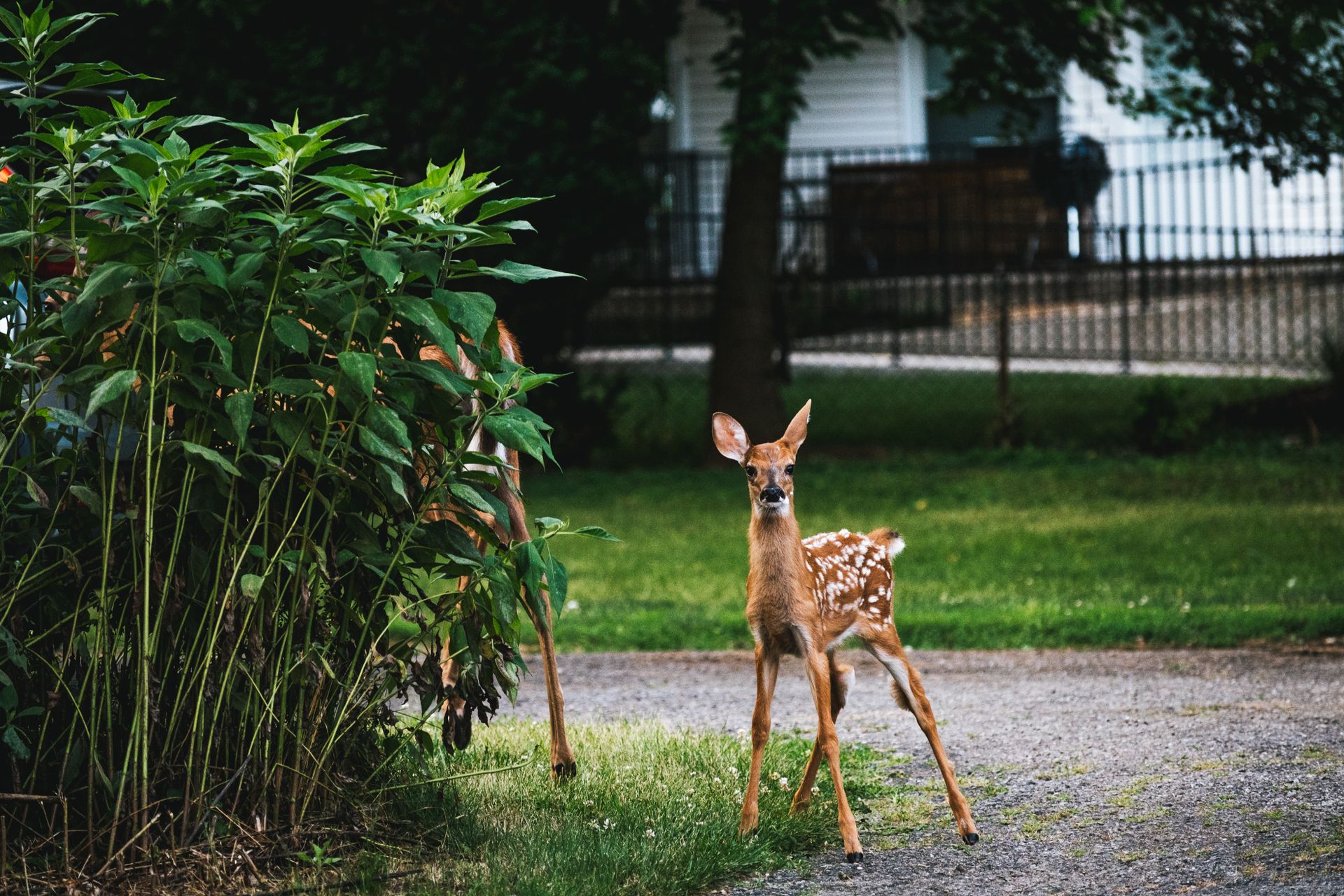
If a space is not activated, it is not a green space. It is an empty lot.
The difference in these terms is very important. A usable lot that has purpose, direction, and stewardship is an activated space. An empty lot is more often than not a blight magnet. With its maintenance being unintentional, the onus falls on neighbors to either maintain it or let it go back to nature.
Unintended, under-maintained lots attract wildlife, and while that sounds cute, it’s actually dangerous. When you have deer attempting to cross (highways) to enter residential neighborhoods with nowhere for them to go, the situation becomes dangerous.
So when someone calls something a green space, and pats themselves on the back for leaving an empty lot, or worse, an overgrown brownfield and touts it as a “green space,” ask yourself:
- Is this space activated?
- Is this space intentionally planned and maintained?
- Does this space serve a purpose in our neighborhood?
Be it a park, a garden, or a well-maintained space for gathering, green spaces have to have useful intention or they become a corpse of trees and weeds attracting unwanted wildlife into urban areas that cannot guarantee their safety.
Don’t let them water down the definition of a green space and sell you a fancy word to cover up that they’ve just created empty lots in your neighborhood with no plan to stabilize the community by pairing lots with intention.
Back to Notes