
Welcome Brother Jerry
It Was Never the Logo
Authored by: Jay Archambeau
“Everyone, welcome Brother Jerry!”
The entire gathering repeated it in unison.
“Welcome Brother Jerry!”
And then they clapped.
I respectfully nodded, but inside, I wanted to disappear. Fast.
Was my discomfort showing?
In other words, was my white showing?
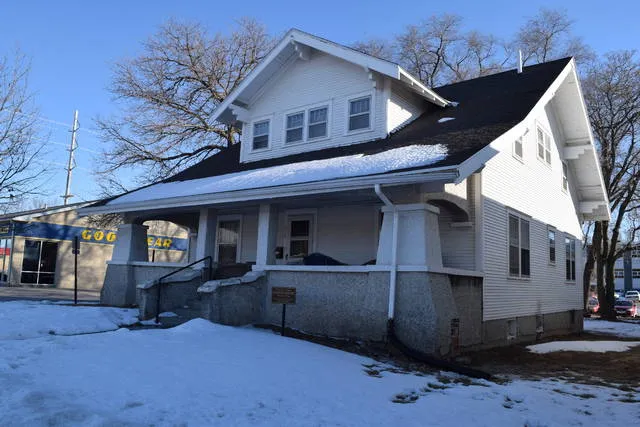
I was standing inside the Black Cultural Center at Iowa State University. The place was packed with Black students. They lined the staircase, filled the second-floor balcony, and gathered throughout the open first floor.
There were easily 100 to 150 people there.
Hands reached toward me from every direction. Everyone seemed eager to introduce themselves, welcome me, and shake my hand.
I could not tell you their names today. But I remember one young Black woman who took my hand and said:
“Welcome, Brother Jerry.”
That was significant for me.
It was the first time a Black woman had called me brother.
Then, from the second floor, came a voice louder and more familiar than all the others.
It belonged to Theaster Gates .
He raised his hands.
“Listen up! Listen up!”
The house grew quiet.
“Everyone, welcome Brother Jerry!”
After the room erupted in welcome, Theaster called down:
“Give me a second. I’ll be down.”
People made way for him, and he came down the stairs in no time. He hugged me and told me he was glad I had made it.
I do not remember responding.
“Let’s go outside and talk.”
I nodded and followed him out.
My heart was racing. I felt completely flushed.
“How are you doing, brother?”
“I’m okay.”
“Let’s sit.”
We parked ourselves on the front porch steps.
“How are you feeling?”
“About that?”
“Yeah. You okay?”
“Yeah. I guess I’m that white guy?”
Theaster smiled.
“But break it down for me. How are you feeling?”
I took a deep breath.
“Oddly, I’m not afraid. But I feel embarrassed and self-conscious.”
“Why is that?”
“Because all eyes were on me in there. I felt looked at.”
“Uncomfortable?”
“Yeah.”
“Mm-hmm.”
My breathing began to settle. I could feel the heat starting to drain from my ears, face, and neck.
“Let me tell you something.”
“Yeah?”
“That feeling you had—that self-consciousness—is how a Black person can feel in a store, walking down the street, or simply being in the presence of white people. And we can feel like that all the time.”
I let that sit.
I quietly nodded.
Then I nodded some more while looking at Theaster.
“I guess this really wasn’t about a logo, was it?”
Theaster laughed.
“What do you think?”
I laughed with him.
“I’d still like to show you what I came up with.”
“Of course, brother. Of course.”
Recently, I have had time to reflect on my journey with anti-racism—learning to become an advocate and, better yet, an ally.
I have also spent time studying Afrocentric philosophy and considering how deeply African knowledge, culture, and thought have shaped humanity.
One of my Facebook friends has spent at least a decade challenging people to offer a philosophy he finds more effective than Afrocentric philosophy. In his estimation, no one has yet presented a viable comparison.
I understand his conviction.
Humanity’s story begins in Africa. The scientific evidence tells us that Homo sapiens evolved there roughly 300,000 years ago. All living people share that distant African ancestry, even though our later histories, cultures, identities, and lived experiences are distinctly our own.
Recently, I overheard a Latina coworker announce:
“Last I checked, we’re all Black. If you don’t believe me, read a book!”
I had to giggle.
Completely out of context—and, at the same time, placed directly back into a much larger human story without skipping a beat.
Scientifically, her comment points toward our shared ancestry. Socially, of course, saying that we all have African origins is not the same as saying we all experience the world as Black people.
That distinction matters.
It also reminded me of a conversation with my friend Darrell.
“You’re Irish, right?” he asked.
“Just about as Irish Spring as they come. I’m so white, I’m practically transparent.”
We laughed.
“Well, you know about the Druids, correct?”
“Sure do. I’ve visited some of the burial sites firsthand.”
“And where do you think their earliest ancestors came from?”
The lightbulb flickered on and burned bright.
“Africa.”
The Druids belonged to the ancient Celtic cultures of Europe. But like every other human population, their story ultimately traces farther back.
Another white person enlightened.
I hope we are growing in number. I really do.
The willful ignorance, misunderstanding, and distortion of history have to stop.
Years later, Darrell asked me another unexpected question.
“Are you sure you’re not Black?”
“Let me check. Nope.”
“Dang.”
“What makes you say that?”
“You’ve been thinking about things from a Black perspective.”
“I guess the spell is working.”
During that same week, another very close friend of mine, Richard, asked a similar question.
“You have to have Black ancestry somewhere.”
“Well, doesn’t everybody, if we go back far enough?”
“Well, yeah—but not like this.”
“Like what?”
“Some of the things you’ve said and the way you’ve said them. Your viewpoint on things feels very familiar.”
“Really?”
“Yeah. I can’t give you a specific example. It’s more of a sense I get.”
“I’ll take that as a compliment and be grateful.”
As I should.
As I do.
Somehow, perhaps, I discovered a back-door entrance to the cookout.
More importantly, I discovered relationships in which I could listen, learn, be challenged, laugh, and occasionally get something wrong without walking away.
This is where I am meant to be.
This is where I want to be.
And I am grateful.
Darrell warned me that the more I studied anti-racism and Afrocentric philosophy—and the more seriously I tried to become an advocate and ally—the more trouble I would find.
Good trouble, that is.
The kind of “good trouble” the late, great United States Representative John Lewis encouraged us to make.
“You’re going to find white friends who abandon you,” Darrell told me. “Some family members may turn their backs, or at best, look at you differently.”
“Sounds lovely, but I’m still signing up.”
“You sure?”
“For all the ways white people have kept People of Color down across generations? You bet. I would accept that discomfort a million times over.”
Darrell laughed.
“See? That’s when I wonder whether I’m still talking to a white guy.”
I laughed too.
Last time I checked.
“But here’s the thing,” he continued. “You ready?”
“Yep.”
“You’re going to see and experience culture in ways you never imagined. Black people will approach you and engage with you first. It won’t happen immediately, and it won’t happen overnight. But you’ll see. It happens.”
Darrell has told me very little that was not true—or that has not eventually come true.
I remain grateful.
What started me down this path?
I have done some soul-searching. These are the earliest moments I can identify.
- When I was five, my parents welcomed a Black boy and, I believe, his brother into our home as foster children for several weekends. That is my earliest remembered interaction with a person of color.
- When I was 12 or 13, I attended a summer camp for children with spina bifida and cerebral palsy on DuPont property in Wilmington, Delaware. In addition to meeting people with disabilities, I rode a bus to and from camp. The driver was a young Black man who took a sincere interest in me. We talked about many things. The last words he said as he dropped me off on my street were, “You’re going to be all right.” Those words stayed with me because they carried both power and promise.
- In college, I crossed paths with the now internationally recognized artist Theaster Gates. He was my resident assistant at Iowa State University. Like that bus driver, Theaster took a sincere interest in me.
Theaster knew I was studying graphic design. He was studying landscape architecture.
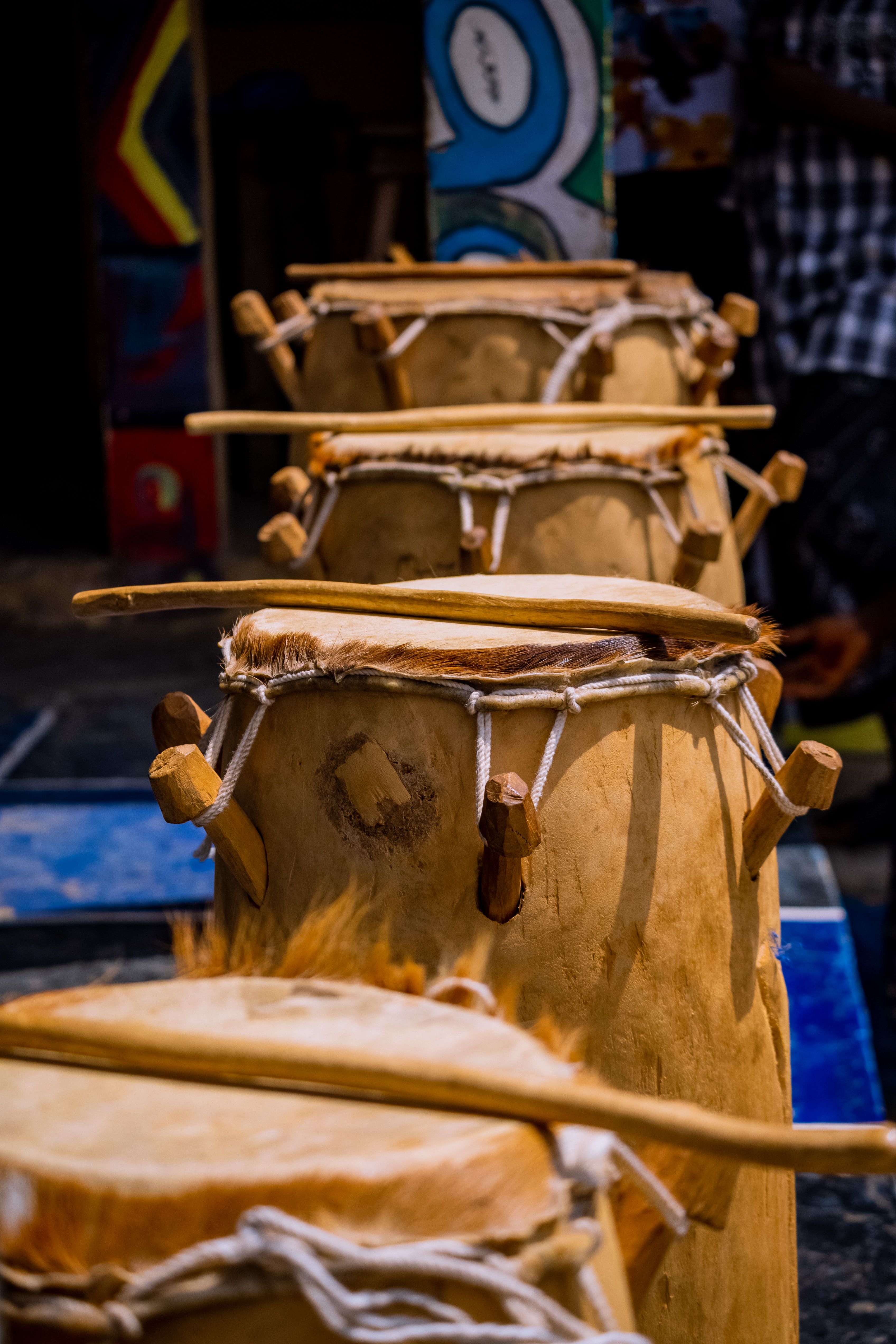
“Do you want to create a logo for my drum circle?”
“Of course I can do that. What’s the name of the group?”
“It’s called ‘Whole ’Nutha Level.’ You have to write it just like it sounds. The emphasis needs to be on ’nutha. Cool?”
“Yeah. You bet.”
We decided I would prepare a few ideas for him to review over the coming weeks. Once we had narrowed the designs down, he would arrange a meeting with the other group leaders.
Between projects, studying, and my other activities, I made time to develop several concepts and send them to him.
He chose the one I had hoped he would.
“Print some examples and come over to the Black Cultural Center. You know where that is?”
“Yeah, I do.”
“Cool. Let’s say four o’clock Tuesday. That’s when my drumming group will be there.”
I prepared printed examples, an explanation of the logo’s meaning, and a digital copy on a disk.
Then I prepared myself for Tuesday.

When I reached the center, it sounded as though a party was underway inside.
The center occupied an old Craftsman house—ironically, painted white.
I knocked on the door. A Black man I did not recognize opened it. I introduced myself and explained why I was there.
“Oh, you’re Brother Jerry, right?”
I think I stood frozen.
“You’re looking for Theaster?”
“Yeah,” I finally managed.
“Come in, Brother Jerry. Come in!”
I stepped nervously onto the porch and through the door.
And that is where this story began.
I do not believe these experiences were meaningless accidents.
Each arrived at a particular moment and offered precisely what I was ready—or needed—to receive.
For years, I wondered why certain people and experiences appeared in my life. I asked:
“What is this about?”
“Why am I here?”
“What am I supposed to learn?”
I do not ask those questions quite as often anymore.
Nowadays, I try to listen.
I try to remain open.
I try to recognize the lesson—even when it arrives wrapped in discomfort.
And then I simply say:
Thank you.
I allow my heart to fill with gratitude.
I do not know what waits around the corner.
But I look forward to every step along every block.
After all, the lesson was never the logo.
Back to Notes