
Design System Case Study
Orbitz Component Library
A self-initiated UI component library created during a major Orbitz rebrand effort, helping establish consistency, efficiency, and reusable standards across desktop and mobile web experiences.
Project Highlights
Overview
During my contract engagement with Orbitz, the company was actively rebranding its digital experience while simultaneously introducing a stronger user-persona-driven approach to product design.
Teams were moving quickly, new experiences were being designed continuously, and multiple designers were contributing assets and interface patterns across the platform.
As development accelerated, I recognized an opportunity to improve consistency and reduce duplication by creating a centralized component library.
The Problem
Orbitz had talented designers producing high-quality work, but each designer was largely responsible for managing and maintaining their own artifacts.
Under compressed schedules and active rebranding efforts, this naturally created opportunities for:
- Duplicate UI patterns
- Inconsistent implementations
- Redundant design work
- Visual drift across experiences
- Slower production cycles
There was no single source of truth that teams could reference when building new experiences.
The Opportunity
My assigned contract work was completed ahead of schedule.
Rather than simply waiting for additional assignments, I identified an opportunity to create something that could benefit the entire organization.
Without being asked, I began assembling a comprehensive component library documenting Orbitz’s most commonly used interface elements.
My Contribution
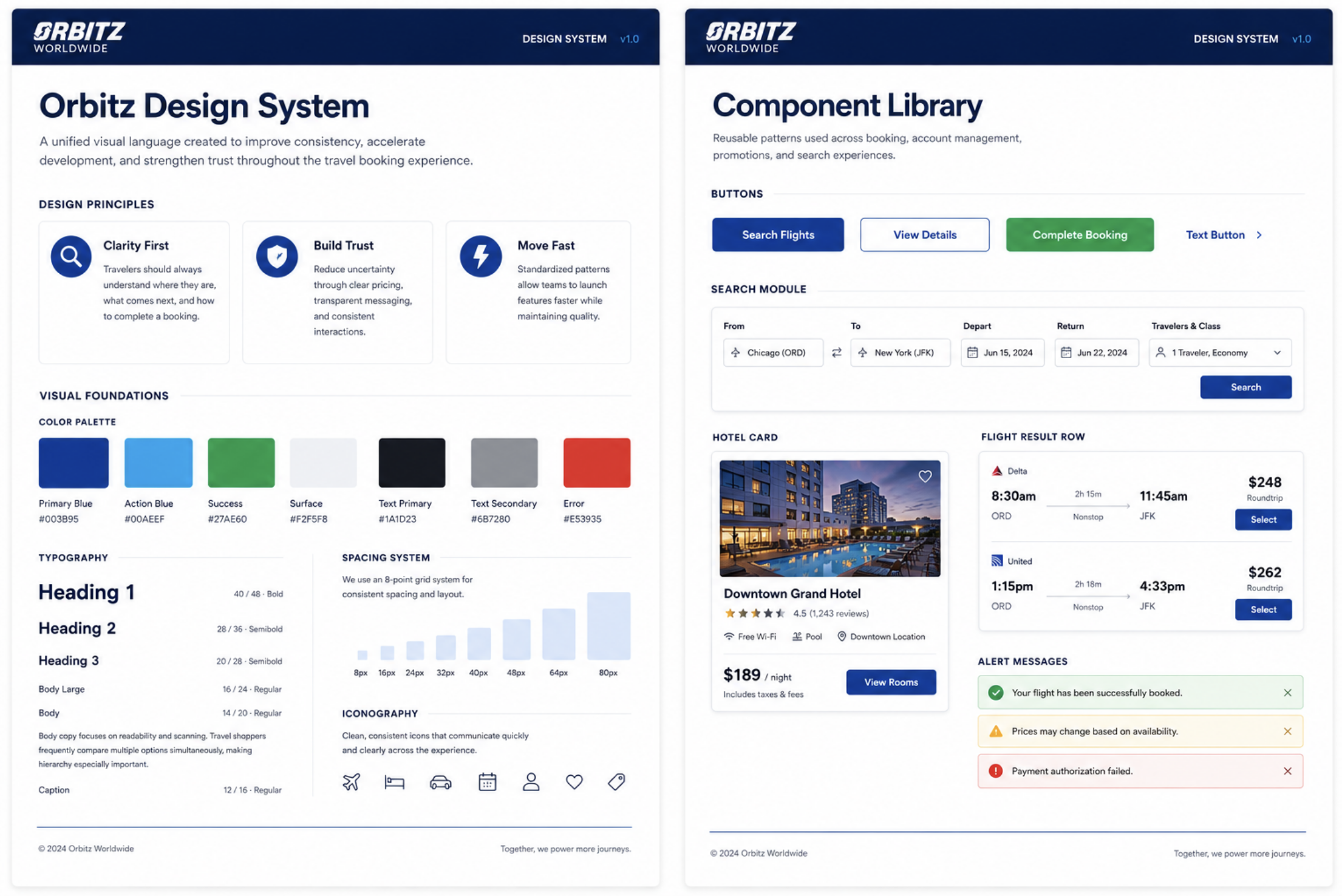
Using Adobe Fireworks, I created a centralized UI library that documented and organized reusable interface components across Orbitz.com desktop and mobile web experiences.
The library included:
- Icons
- Typography standards
- Buttons and button states
- Navigation elements
- Form controls
- Search widgets
- Booking modules
- Promotional units
- Seasonal marketing modules
- Supporting graphic assets
- Data tables
- Header treatments
- Footer elements
- Error states and messaging
Adobe Fireworks
The entire library was created in Adobe Fireworks, a tool that at the time was heavily used for web and interface design.
Fireworks offered unique advantages for organizing reusable assets, managing interface states, and documenting component relationships.
Long before modern design tools introduced component systems and libraries as standard features, Fireworks allowed designers to create highly organized collections of reusable UI elements.
The Rebrand Context
The effort occurred during a broader Orbitz rebranding initiative.
Customer personas were influencing design decisions, navigation patterns were evolving, and teams were working rapidly to improve the overall travel booking experience.
The component library helped support these efforts by creating greater alignment between teams and reducing unnecessary variation.
Outcome
The completed component library was delivered to management as a parting contribution at the conclusion of my contract.
No one had requested it. No one had assigned it. It was simply something I believed would help the team.
Leadership was surprised and extremely appreciative of the effort. The library provided a centralized resource for future design work and helped improve consistency and efficiency across the organization.
Reflection
Looking back, this project represents one of the earliest examples of design system thinking in my career.
Although we were not using modern terminology such as component-driven design, design tokens, or design systems, the underlying principles were exactly the same.
Create consistency. Reduce duplication. Increase efficiency. Improve user experience.
The lessons learned through this effort became foundational to later work on the Follett Design System and other enterprise-scale UX initiatives.
Great systems are not built because someone asks for them. They are built because someone recognizes a need before everyone else does.
Supporting Visuals
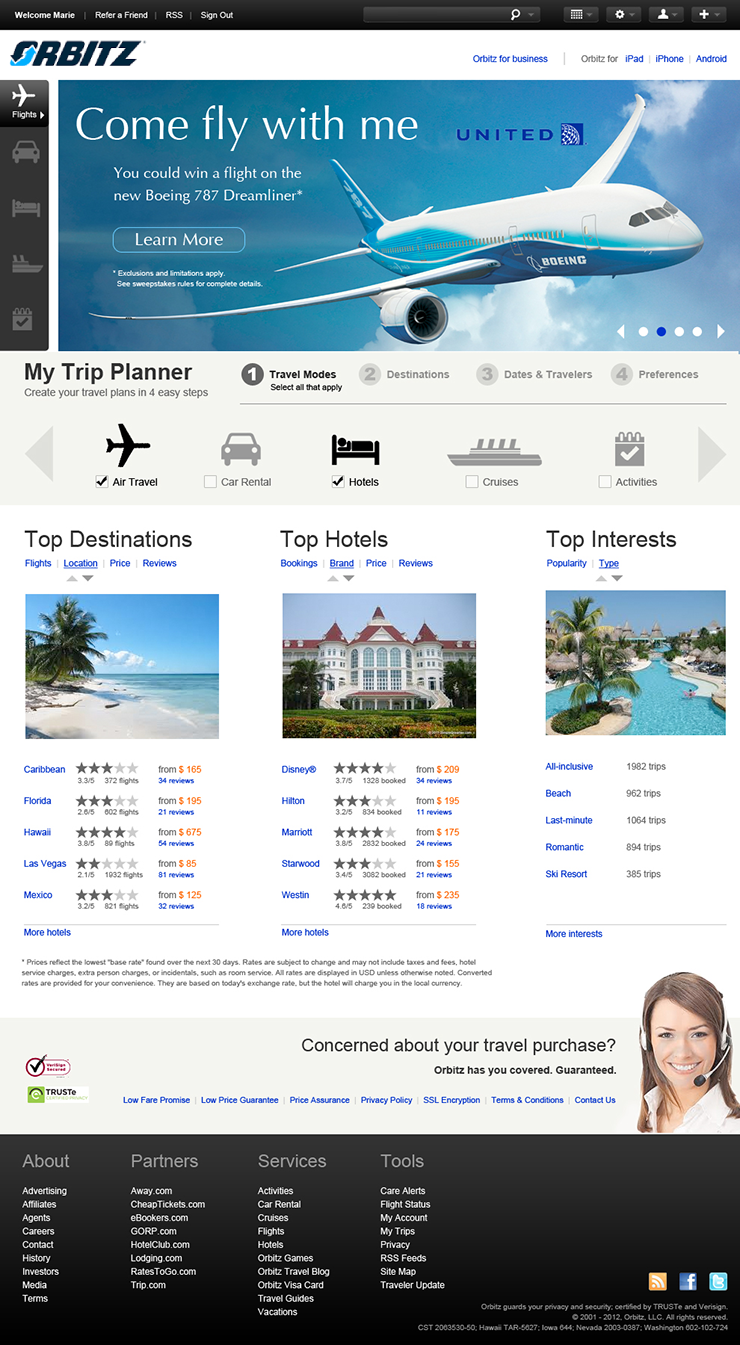
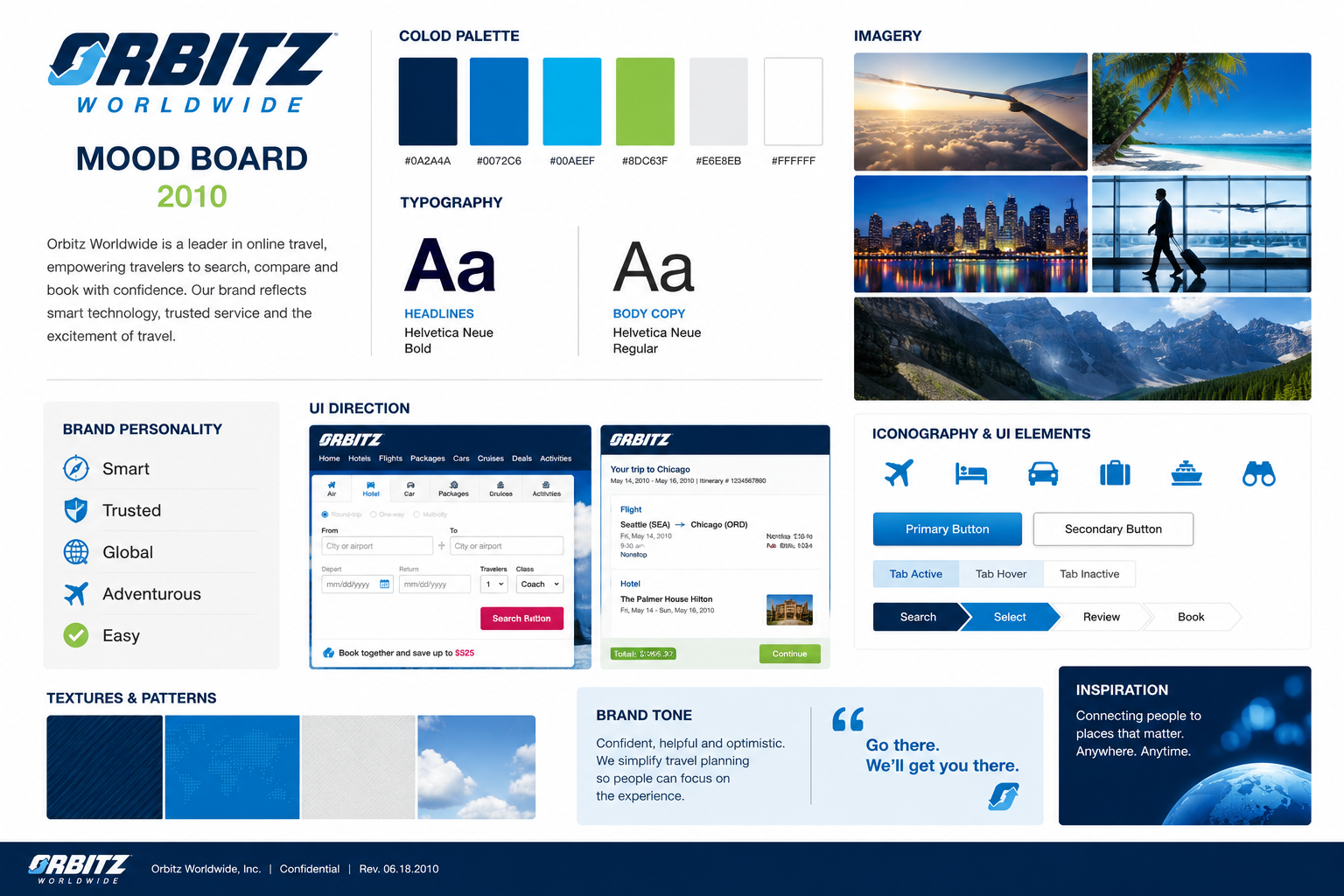
A selection of Orbitz-related projects that followed the Orbitz Component Library and Accompanying Style Guide.

Interested in working together?
Whether you’re building a design system, organizing reusable UI patterns, or bringing consistency to a complex digital product, I’d love to hear about it.
Get in Touch